Two characters
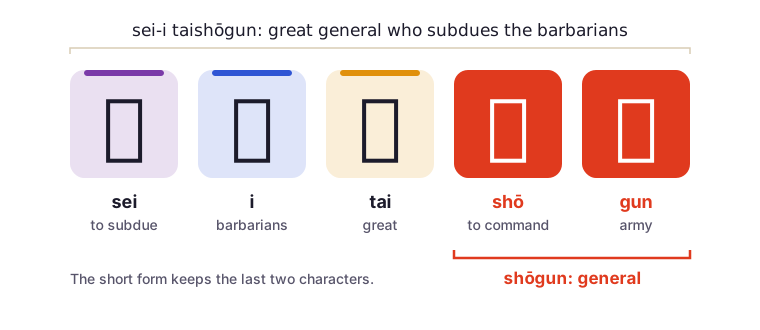
The word is written with two characters, 将, to command, and 軍, an army. In Japanese it is said with a long first vowel, roughly show-goon, which is why careful English spelling writes it shōgun.
It is a shortening. The full title was sei-i taishōgun, 征夷大将軍, which is usually translated as “great general who subdues the barbarians”. The barbarians were the Emishi, the peoples of northern Honshu who resisted the rule of the imperial court.
The shogun’s government
A shogun who governed needed a word for his government. The one that stuck is bakufu, 幕府, the “tent government”, after the curtained field headquarters of a general on campaign. It only came into common use late in the Edo period, when scholars applied it back to earlier regimes. In English the same thing is usually called a shogunate.
Tycoon
When the Tokugawa shogunate dealt with foreign states it often styled the shogun taikun, 大君, “great lord”, a title that sidestepped the awkward question of whether he or the emperor ranked higher. American and British diplomats of the 1850s met it, and English borrowed it as tycoon, first recorded in 1857.
Abraham Lincoln’s secretaries called him “the Tycoon”, and by the twentieth century the word meant a powerful businessman. Shogun itself became an everyday English word much later, through James Clavell’s novel of 1975.